What Makes a Bengal Cat Different From Other Breeds? Origin, Price & Care Guide (India)
Bengal cats are one of the most talked-about breeds right now, mainly because of their wild leopard-like look. Before you decide to bring one home, here's a quick, honest breakdown of where they come from, what they usually cost in India, and what daily life with one actually looks like.
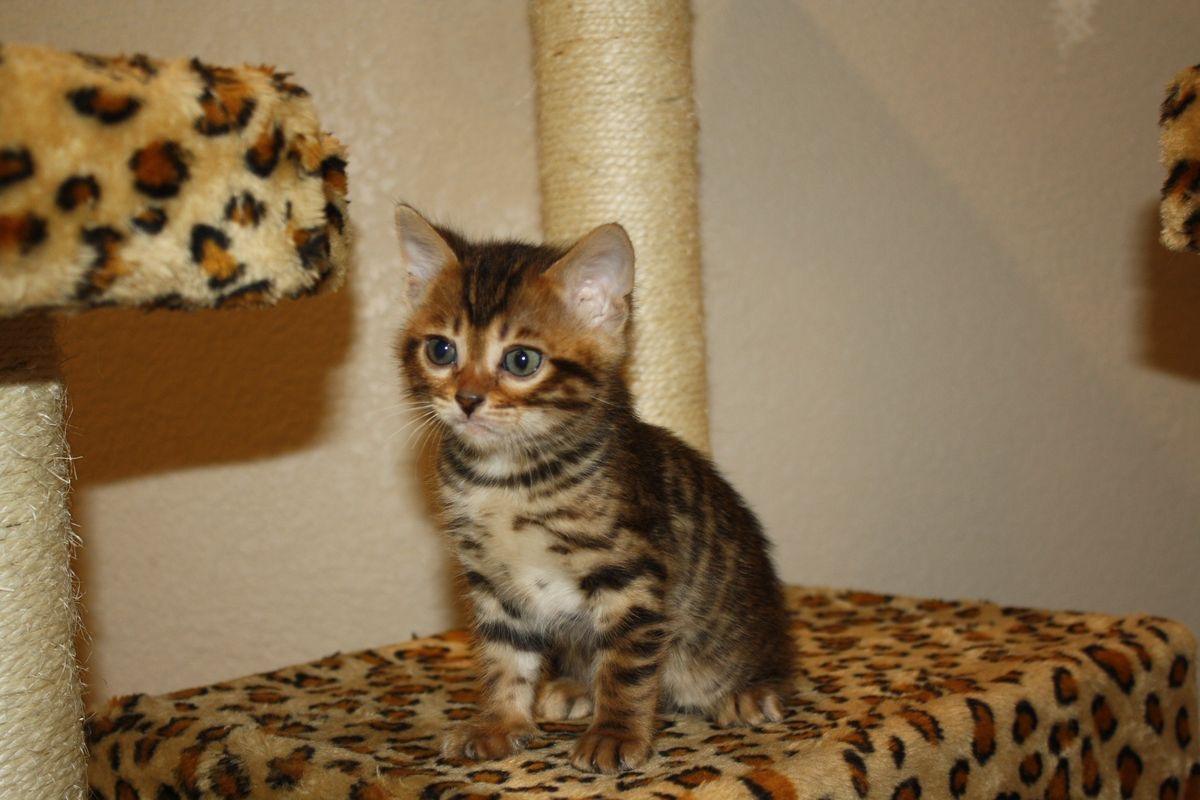
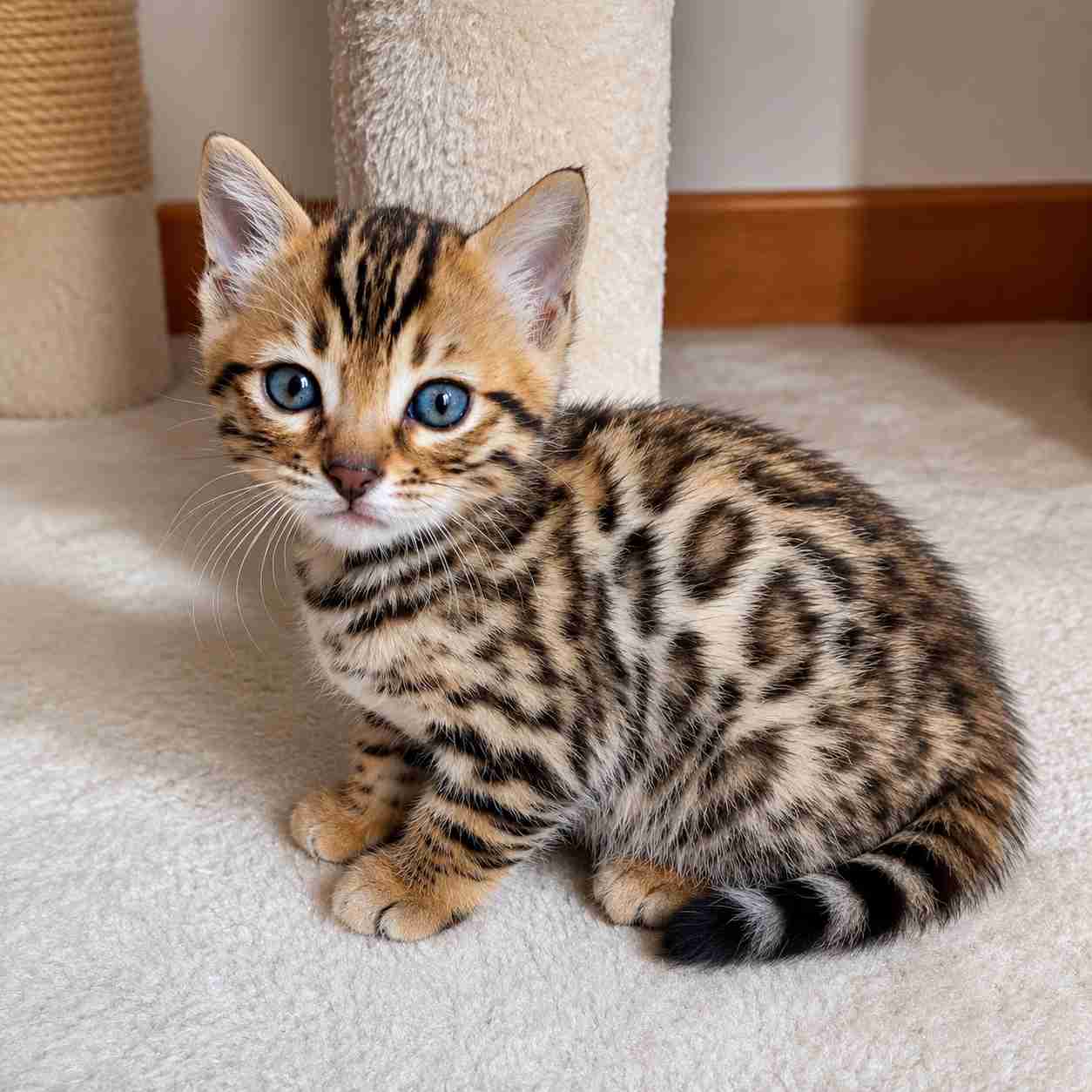
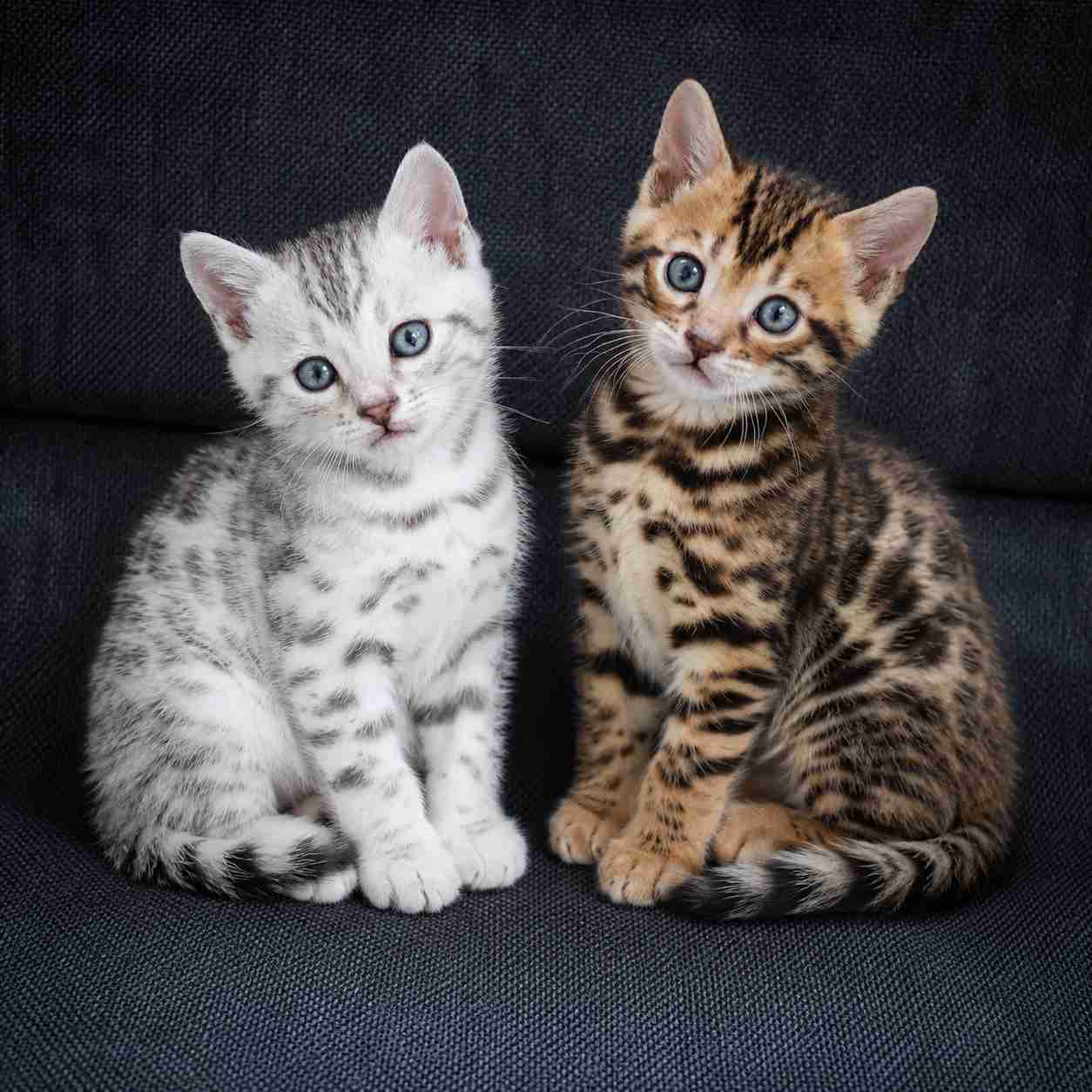
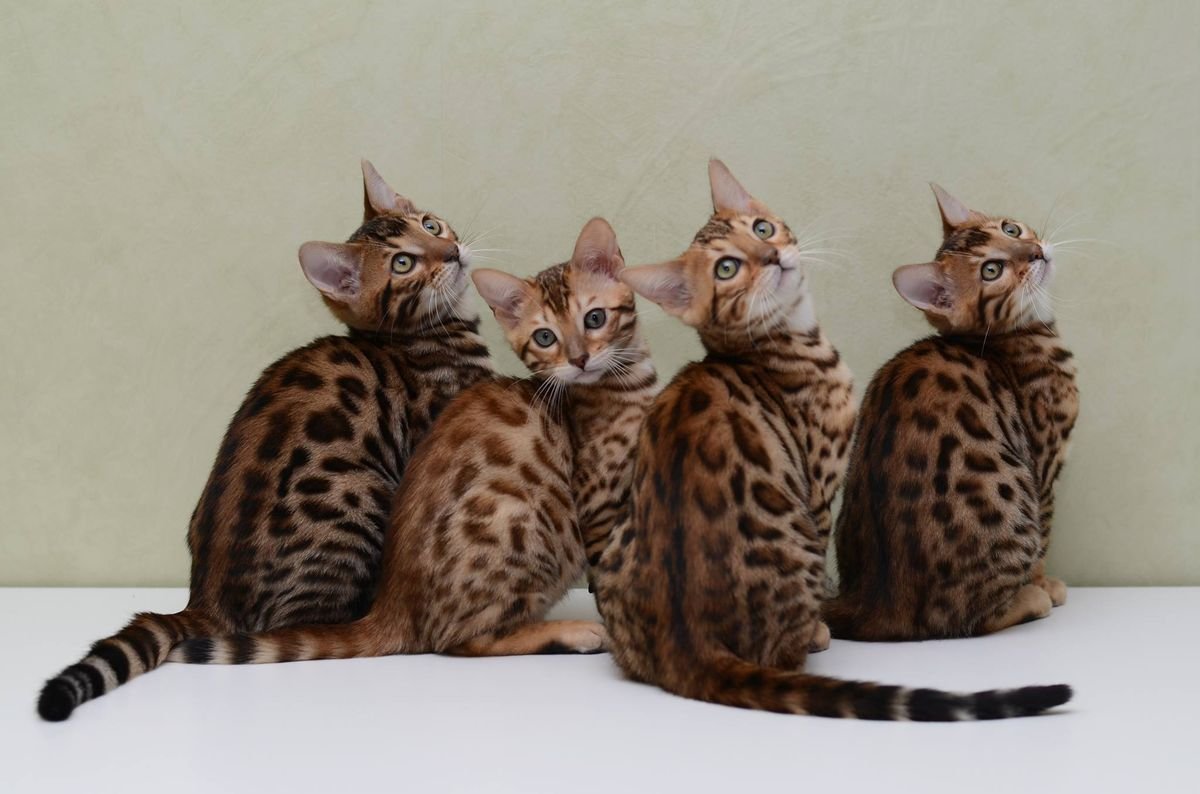
Bengal Cat Gallery
A closer look at Bengal cats and kittens, their wild rosette-spotted coats, glowing amber eyes, and striking leopard-like markings.
Where Do Bengal Cats Actually Come From?
The Bengal cat isn't an ancient, naturally occurring breed like most others, it's actually a fairly recent creation. It was developed in the United States by crossing a domestic cat with the Asian Leopard Cat, a small wild feline found across South and Southeast Asia. The goal was simple: keep the striking, wild "big cat" appearance but give it the temperament of a normal house cat. Over a few generations of selective breeding, that's exactly what breeders ended up with, a cat that looks like it belongs in the jungle but behaves like any other pet.
In India, the Bengal has picked up a strong following over the past few years, especially among younger pet owners who want something a little different from the usual Persian or indie cat. Its spotted or marbled coat draws attention almost instantly, and unlike most long-haired breeds, it doesn't demand constant grooming. That said, this isn't a low-effort pet in every sense, Bengals are high-energy, intelligent, and need real mental and physical engagement, so they suit an active household far better than a quiet one.
Why Is It Called a "Bengal" Cat?
The name has nothing to do with the Indian state of Bengal or the Bengal tiger, even though people often assume that. It actually comes from the scientific name of its wild ancestor, the Asian Leopard Cat, Prionailurus bengalensis. Early breeders shortened this to "Bengal" when naming the new breed in the 1980s, and the name simply stuck from there.
What You'll Find in This Guide
Ahead, we've covered the practical side of owning a Bengal in India, what a healthy kitten typically costs, the grooming and diet routine you'll need to follow, common health concerns specific to the breed, and the key questions to ask a breeder before you commit. If you're weighing whether a Bengal fits your lifestyle, or you've already decided and just need the details, this should answer most of what you're looking for.
How and When Was the Bengal Cat Breed Created?
Global Origin
Unlike breeds that developed naturally over centuries, the Bengal cat has a fairly specific starting point. Credit for the breed largely goes to an American breeder named Jean Sugden Mill, who in the 1960s began experimenting with crossing a domestic cat with an Asian Leopard Cat. Her early goal wasn't really about creating a new pet breed, it came out of curiosity about whether the wild cat's natural resistance to feline leukemia could be studied through hybrid offspring.
The project picked up real momentum in the 1980s, when Jean Mill resumed her breeding work more seriously, this time crossing the hybrid offspring with domestic breeds like the Egyptian Mau to lock in that rosette-and-spot coat pattern while keeping the temperament friendly and predictable. By the late 1980s, the Bengal had enough consistent traits to be presented as a distinct breed, and it went on to gain championship recognition from TICA (The International Cat Association) in the early 1990s.
Because the breed is still relatively young compared to something like the Persian, most Bengals today are several generations removed from their wild ancestor. Breed standards actually require this, cats close to the original wild cross (usually labelled F1 to F3) are considered early-generation and are rarely sold as regular pets, while cats from F4 generation onward are the ones typically available in the pet market.
Bengal Cat in India When Did It Arrive?
Bengal cats are a much newer entrant to the Indian pet scene compared to breeds like the Persian. Their presence really started picking up only in the last 8 to 10 years, largely driven by growing exposure through international pet content on social media and a rising interest in "designer" or exotic-looking breeds among younger, urban pet owners.
- Initially, Bengal kittens in India were almost entirely sourced through a handful of specialised importers, which kept prices high and availability limited to a small circle of buyers.
- As more dedicated Bengal breeders set up in India, particularly around Delhi NCR, Mumbai, Bangalore, and Pune, locally-bred kittens became easier to find and noticeably more affordable than imported ones.
- Today, the Bengal is increasingly popular among owners who want an active, engaging pet with a distinctive look, though it's still considered more of a specialty breed than an everyday choice in India.
At Royal Kitten, we work only with experienced home breeders who understand what a Bengal actually needs, proper space, enrichment, and correct socialisation from an early age, so the kittens that reach you are confident, healthy, and genuinely ready for a home. The Royal Kitten team has been guiding new owners through pedigree kitten adoption in India since 2005, so we've seen this breed's journey here from a rare import to a genuinely sought-after choice.
What Does a Bengal Cat Look Like? Body, Coat & Pattern Guide
The Bengal's whole appeal comes down to its look, it's the closest thing to owning a mini leopard. Here's a full breakdown of body build, coat colours and patterns, size, eyes, and the different pattern types you'll come across when picking a kitten.
Appearance & Body Structure
Bengal cats have a long, athletic body built more like a wild cat than a typical house cat, muscular, with a slight forward lean at the shoulders and a noticeably long tail. The head is small in proportion to the body, with a broad muzzle, high cheekbones, and medium-to-small rounded ears set well apart. Their hind legs are slightly longer than the front, giving them that alert, ready-to-pounce posture even at rest.
Coat Colours & Patterns
The Bengal's coat is short, dense, and unusually soft, often described as feeling more like silk or pelt than typical cat fur, thanks to a gene inherited from its wild ancestor. What really sets it apart, though, is the pattern. Here's the full range you'll find across recognised Bengal colours:
Because the coat is short and low-shedding, Bengals don't need the intense grooming routine long-haired breeds do, an occasional wipe-down is usually enough to keep that glossy shine.
Size & Weight
Eye Colour
Bengal eyes tend to be large, oval-to-round, and set at a slight angle, another trait borrowed from their wild lineage. Eye colour generally runs independent of coat pattern, though certain shades are more common with specific coat groups (Snow Bengals, for instance, often carry blue or aqua eyes).
Bengal Coat Pattern Types
Not every Bengal wears the same pattern. Breeders and judges generally sort the coat into a few recognised types, and this is often the single biggest factor buyers look at when choosing a kitten. Here's how they break down:
Spotted
Distinct, randomly scattered spots across the body. The most classic and widely recognised Bengal look.
Marbled
Swirling, horizontal marble-like pattern instead of spots. Striking and unique, no two are identical.
Rosetted
Spots with a distinct outline and darker centre, closest resemblance to a wild leopard's coat. Highly sought after.
Arrowhead
A rosette sub-type where spots form an elongated, arrow-like shape pointing toward the head.
Clouded
Large, soft-edged patches that blend together, giving a smoky, less-defined pattern across the coat.
Is a Bengal Cat's Temperament Right for You?
Bengal cats are anything but low-key. Where most breeds are content lounging around the house, a Bengal is usually the one climbing your bookshelf, opening cabinet doors, or figuring out how to unlatch a window. This isn't a lap cat in the traditional sense, it's smart, driven, and needs an outlet for that energy, which makes it a completely different kind of commitment compared to calmer breeds.
A High-Energy, Highly Intelligent Breed
Bengals are among the most active domestic cat breeds you'll come across. They're playful well into adulthood, rarely settling into the "senior nap all day" pattern some breeds show. Their intelligence means repetitive toys get boring fast, most owners end up rotating puzzle feeders, interactive toys, and climbing structures just to keep them mentally satisfied. Without enough stimulation, a bored Bengal often gets destructive, not out of spite, but simply because it has energy with nowhere to go.
Their Unusual Love for Water
One trait that surprises almost every new Bengal owner: this breed genuinely likes water, something most cats actively avoid. It's common to see a Bengal pawing at a running tap, joining you near the shower, or even dipping a paw into a water bowl just to watch it ripple. It's believed to be a trait carried over from their wild ancestry. Practically, this means keeping toilet lids down and being mindful around open water sources at home.
How They Behave Around Children
Bengals can be great with children, especially kids old enough to engage in active play rather than passive cuddling. They tend to bond closely with family members who interact with them regularly and enjoy games like fetch, which many Bengals pick up naturally. The main thing to manage is energy matching, a Bengal playing rough during an excited moment isn't being aggressive, it's just how they express enthusiasm, so supervised play in the early stages helps set the right boundaries.
Getting Along With Other Pets
Bengals generally do well with other pets, particularly if they're raised together or introduced properly, but their high prey drive means small pets like birds or hamsters need to be kept well out of reach. With other cats or active dogs, Bengals often do better than expected, they tend to enjoy having a playmate that can match their energy rather than sitting around alone all day.
Who This Breed Is Actually Suited For
A Bengal isn't the right fit for someone who wants a quiet, low-maintenance pet. This breed suits active households, people who work from home, have time for daily play sessions, or are genuinely excited about cat enrichment. What you get in return is a strikingly intelligent, engaging companion that behaves more like an interactive pet than a background presence. The trade-off is real: minimal grooming effort, but a serious time and attention commitment.
What Health Problems Are Bengal Cats Prone To?
Bengal cats are, on the whole, a fairly robust and athletic breed with no major structural issues like flat-faced cats have. Still, there are a handful of conditions linked to the breed's genetics that every owner should know about before bringing one home.
Health Issues to Watch For
Hypertrophic Cardiomyopathy (HCM)
This is a thickening of the heart muscle and one of the more serious conditions seen across several cat breeds, including Bengals. It often shows no early symptoms, which is why reputable breeders screen breeding cats through periodic cardiac ultrasounds before pairing them.
Progressive Retinal Atrophy (PRA)
A genetic eye condition that causes gradual vision loss over time. It's inherited, so responsible breeders test their lines to avoid passing it on, but it's worth asking about when you're choosing a kitten.
Pyruvate Kinase (PK) Deficiency
A genetic blood disorder that affects red blood cell survival, leading to anaemia in affected cats. A simple DNA test can confirm whether a breeding cat carries the gene, so it's a good question to ask a breeder directly.
Sensitive Digestion
Bengals are known to have slightly more food-sensitive stomachs than average, with some cats showing intolerance to certain grains or low-quality fillers. A consistent, good-quality diet usually keeps this in check.
Distal Neuropathy
An uncommon but documented condition in the breed where nerve function in the lower legs is affected, sometimes linked to diabetes. It's rare, but worth being aware of, particularly as cats age.
Weight-Related Joint Stress
Given how athletic and jump-heavy Bengals are, excess weight puts more strain on joints than it would in a less active breed. Keeping a Bengal lean, rather than just "healthy weight" on paper, genuinely matters for this breed.
General Vaccination Guide
Every kitten's exact schedule can vary slightly, but most vets in India follow a similar general timeline for core vaccinations. Use this as a rough guide, not a replacement for your vet's advice.
Routine Vet Care
Beyond vaccinations, a Bengal benefits from a check-up at least once a year, with particular attention to heart health as it ages, given HCM's tendency to develop silently. Because Bengals are so physically active, it's also worth mentioning any changes in mobility, energy levels, or appetite to your vet early rather than waiting for a scheduled visit.
How Do You Take Care of a Bengal Cat Properly?
A Bengal's biggest care requirement isn't grooming, it's keeping that sharp mind and athletic body busy. Get enrichment, diet, and daily routines right, and you'll have a genuinely happy, well-adjusted cat. Here's what a proper Bengal care routine actually looks like.
Exercise & Mental Enrichment
This is where most of your effort should go with a Bengal. A few minutes of half-hearted play won't cut it, this breed needs genuine daily engagement: interactive wand toys, puzzle feeders that make them work for treats, and ideally a tall cat tree or wall shelving to climb. Many owners also leash-train Bengals for supervised outdoor walks, since the breed adapts well to it and burns off energy that indoor play alone can't match. Skimp on this, and you'll likely see it show up as scratching, knocking things over, or general restlessness.
Coat Care
The good news here, Bengal grooming is minimal. A weekly brush with a soft rubber grooming glove is usually enough to remove loose hair and keep the coat's natural shine. Baths are rarely needed unless the cat gets into something messy, thanks to that short, low-maintenance coat.
Managing Their Love for Water
Given how many Bengals are drawn to running water, keep toilet lids closed and be mindful of open buckets or containers around the house. Some owners actually lean into this trait by giving their Bengal a shallow water dish to play in, it satisfies the curiosity safely and keeps them from targeting the kitchen sink instead.
Diet & Nutrition
- Kitten stage (0–12 months): High-protein, kitten-specific food, fed in 3–4 small meals a day to support their fast growth and activity level.
- Adult (1+ years): A high-protein adult diet works best given how active this breed stays, low-activity cat food often isn't calorie-appropriate for a Bengal.
- Treats: Since Bengals respond so well to food-based training and puzzle feeders, keep treats measured so enrichment doesn't turn into overfeeding.
Litter Training
Bengals pick up litter training quickly and rarely have issues once shown the box. The more common challenge is a Bengal deciding to "help" by digging excessively or occasionally knocking litter out while exploring, a covered box with higher sides usually solves this.
Home Setup
Because Bengals are natural climbers and jumpers, secure loose items on high shelves and consider cat-proofing cabinets, this breed is notorious for figuring out door handles and latches. Vertical space matters more for Bengals than almost any other breed, so investing in a proper cat tree or wall-mounted perches early on will save you a lot of furniture-related headaches later.
Bringing a Bengal kitten home soon? Follow our detailed post-delivery care guide to get the first few weeks right.
Read the Kitten Care Guide →How Much Does It Really Cost to Own a Bengal Cat?
The kitten's purchase price is really just the entry cost. What determines the actual long-term expense of owning a Bengal is everything that follows over the next 12 to 16 years, food, enrichment, vet care, and the occasional replaced houseplant or scratched-up furniture corner. Going in with realistic expectations makes the whole experience far smoother. For a detailed breakdown of current kitten prices and what drives them, see our Bengal cat price and monthly cost guide.
What Ongoing Ownership Actually Includes
- Food: Bengals do best on a high-protein, good-quality diet given how active they are, and this tends to cost more than feeding a low-energy breed, since portion sizes and protein content both run higher.
- Enrichment & toys: This is a cost most first-time Bengal owners underestimate. Puzzle feeders, interactive toys, and a proper cat tree aren't optional extras for this breed, they're closer to a necessity, and most owners end up replacing or rotating them regularly.
- Vet care & vaccination: Annual vaccinations, deworming, and at least one yearly health check-up are essential, with particular attention to heart health screening as the cat matures.
- Litter & daily supplies: Litter, scratching posts, and grooming tools are minimal for this breed compared to long-haired cats, one of the few places Bengal ownership actually costs less.
- Home setup & replacements: Given how much Bengals climb and explore, some owners budget for occasional cat-proofing purchases, safety latches, secured shelving, or the odd replaced item during the kitten's more curious phase.
None of these costs are fixed, they shift depending on your city, the quality of food and enrichment you choose, and how much of the home you've already cat-proofed. What matters most is planning for an active, engaged pet, not just accounting for the day-one purchase price.
Are Bengal Cats Actually Wild? Myths vs Facts
Because of how they look, Bengal cats attract more myths than most breeds. Here's what's actually true, and where these misconceptions usually come from.
Bengal Cat vs Savannah Cat: What's the Difference?
Bengal and Savannah cats get mixed up constantly, both have that exotic, spotted look, and both come from a wild ancestor cross. But they're genetically different breeds with very different care needs, here's how they actually compare.
| Feature | Bengal | Savannah |
|---|---|---|
| Origin | USA, developed by crossing a domestic cat with the Asian Leopard Cat, an Asian wild cat species | USA, developed by crossing a domestic cat with the Serval, a much larger African wild cat |
| Size | Medium-sized, athletic build, typically 3.5–7 kg | Noticeably larger, especially in early generations, can reach 7–11 kg or more depending on generation |
| Coat Pattern | Spotted, marbled, or rosetted patterns, closer resemblance to a leopard | Bold, large dark spots on a lighter background, closer resemblance to a cheetah |
| Temperament | Active and playful, but generally settles well into a typical home once past kittenhood | Even higher energy than a Bengal, often needs more space and a more experienced owner, especially in early generations |
| Price in India | Generally more accessible and widely available, see our Bengal cat price guide for current ranges | Considerably rarer in India, with far fewer breeders and significantly higher prices, especially for early-generation cats |
Is the Bengal Cat an Officially Recognised Breed?
Yes, the Bengal is a fully recognised breed internationally, though its journey to recognition was more recent than most. The International Cat Association (TICA) was actually the first major registry to grant the Bengal championship status, back in the early 1990s, and remains the organisation most closely associated with the breed's development. Since then, other bodies including the Cat Fanciers' Association (CFA) and the World Cat Federation (WCF) have also recognised it, each with slightly different standards around generation requirements and accepted coat patterns.
Can You Register a Bengal Cat in India?
Yes, Bengal owners in India can register their cats through cat clubs and fancier associations affiliated with international bodies like TICA. This is particularly relevant for the Bengal, since registration paperwork often specifies the cat's generation (how many generations removed it is from the original wild cross), which matters for both show eligibility and for confirming you have a genuinely pet-appropriate cat. Registration typically involves submitting lineage details, generation information, coat pattern, and photographs.
What We Provide With Every Kitten
Along with your kitten, we provide proper health documentation, records of the vet check-up, vaccination status, and deworming, along with clear information on the kitten's generation, so you know exactly what you're bringing home. If you decide to pursue formal registration afterward, this documentation gives you a solid starting point.
Want to know exactly how we verify a kitten's health before it's cleared for delivery? See our 3-step kitten verification process.
How Does a Bengal Kitten Grow, Week by Week?
Knowing how a kitten develops week by week helps you understand what to expect, and why the age you bring one home actually matters, especially for a breed with a wild ancestor a few generations back. Here's how a Bengal kitten typically develops from birth to adulthood.
Ideal age to bring home a kitten:
Generally 12–13 weeks is recommended for Bengals, slightly later than some breeds, giving a bit more time for proper socialisation given their more independent, wild-lineage temperament.
How Should You Adjust Bengal Cat Care Through India's Seasons?
India's weather swings between extremes, and while a Bengal's short coat handles some seasons more easily than long-haired breeds, others need a bit more attention. Here's how to adjust care through the year.
- Bengals generally handle Indian summers better than long-haired breeds, thanks to their short, low-insulation coat.
- Still, keep fresh water available at all times and provide a cool, shaded resting spot during peak afternoon heat.
- Given how active Bengals stay year-round, watch for signs of overheating after energetic play sessions, heavy panting or unusual lethargy are worth a vet check.
- Bengal's short coat dries quickly, which is a genuine advantage during humid, damp months.
- Clean the litter box more frequently, humid conditions speed up bacteria growth regardless of coat type.
- Keep an eye on paw pads and ears for fungal issues, since Bengals tend to explore damp corners and outdoor spaces more than calmer breeds.
- This is actually the season Bengals need more support in, their short coat offers far less natural insulation than a Persian's thick double coat.
- Provide warm bedding, and consider keeping the cat indoors during colder nights, especially in northern parts of India.
- Some owners notice their Bengal seeking out warm spots, near heaters or sunny windows, more actively during this season, which is completely normal.
Should You Adopt or Buy a Bengal Cat?
Both routes can work well, the right choice depends on what matters most to you, coat pattern predictability, generation clarity, cost, or giving a cat in need a home.
Buying a Home-Bred Kitten
- A kitten like ours, raised in a real family home rather than a commercial cattery, gets consistent human interaction early on, which matters a lot for a breed that needs confident, well-socialised handling from the start.
- Comes with proper health documentation, including vet check-ups, vaccination records, and clear generation information, so you know exactly what you're bringing home.
- The better route if you have a specific coat pattern (spotted, marbled, rosetted) in mind, since you can see the kitten and often the parents beforehand.
- Home-raised kittens are typically already comfortable with handling and basic litter training, and have had the early enrichment exposure this breed benefits from.
Adoption
- Bengal cats do occasionally turn up in shelters and rescues, sometimes because an owner underestimated how much activity and enrichment the breed needs.
- Generally costs less than buying a kitten.
- Gives a cat that needs a home a second chance, often an adult cat that's already past the more demanding kitten phase.
- Background details like exact generation, lineage, or early health history are often limited or completely unknown.
Not sure where to start? Our complete guide to buying a kitten in India walks you through the entire process step by step.
Why Are Bengal Cats So Popular on Social Media?
Few breeds have taken off on the internet quite like the Bengal. Its striking, wild-cat looks translate incredibly well to photos and video, which has made it one of the most-followed cat breeds across Instagram and other platforms in recent years.
A Genuine Internet Sensation
Bengal cats regularly rack up massive followings on social media, largely because of how photogenic and expressive the breed is. Their rosetted or marbled coats catch the eye instantly, and their high energy and curiosity make for entertaining video content, from climbing antics to their well-known fascination with water. This online visibility has played a real role in driving demand for the breed globally, including in India.
The "Mini Leopard" Appeal
A big part of the Bengal's cultural pull is the novelty of owning something that looks exotic while behaving like a completely normal house cat. This "wild look, domestic heart" combination is unusual among popular breeds, and it's a major reason the Bengal keeps coming up in conversations about unique, statement pets.
What Are the Different Types of Bengal Cats?
The Bengal breed covers more variation than most people expect, both in coat pattern and in generation. Coat patterns (Spotted, Marbled, Rosetted, Arrowhead, and Clouded) are covered in detail in our Physical Characteristics section above. Here are the other categories worth knowing about.
Snow Bengal
A striking colour variant with a much lighter base coat, ranging from cream to near-white, paired with the breed's signature spots or marbling. Snow Bengals get their pale colouring from Siamese or Burmese genetics further back in their lineage, and they often have blue or aqua eyes.
Silver Bengal
Another popular colour variant, where the base coat is a cool, silvery grey rather than the classic brown, making the dark spots or rosettes stand out even more sharply.
Generation Labels (F1 Through SBT)
Unlike coat variants, this classification refers to how many generations removed a Bengal is from its original wild cross. Early generations (F1–F3) are closer to the wild Asian Leopard Cat and are generally not sold as pets. By the time a Bengal reaches "SBT" status (Stud Book Tradition, roughly F4 and beyond), it's considered fully domestic and is the type most commonly available for adoption or purchase.
How Does Genetics Affect a Bengal's Coat and Health?
Bengal coat genetics are notably complex, the spotted and marbled patterns, along with the various colour groups (Brown, Snow, Silver), come from a mix of genes inherited from both the Asian Leopard Cat side and the domestic breeds used in the original crosses, which is part of why the breed shows such striking pattern diversity, as covered earlier in this guide.
On the health side, conditions like HCM (Hypertrophic Cardiomyopathy) and PK deficiency, already discussed in our Health & Common Health Issues section, are genetic, which is why responsible breeding programs place real importance on screening breeding cats before pairing them. Maintaining proper generational distance from the original wild cross is another key consideration specific to this breed, breeding too close to the wild ancestry increases the risk of unpredictable temperament, which is exactly why generation verification matters so much when choosing a kitten.
Is a Bengal Cat the Right Choice for You?
The Bengal cat has carved out a genuinely unique place among pet breeds in India, thanks to its striking wild-cat looks, sharp intelligence, and unusually playful nature. It isn't the right fit for everyone, this is a breed that rewards active, engaged owners far more than those looking for a quiet lap cat. If you're ready for daily enrichment, understand the generation and health considerations specific to this breed, and want a genuinely interactive companion, a well-raised, properly socialised Bengal kitten can be one of the most rewarding pets you'll ever bring home.
Explore Other Popular Cat Breeds
Looking for a cat breed other than Bengal? Explore our detailed breed guides to compare different cats, their characteristics, care requirements, and prices. Choose the breed that best matches your lifestyle and family.
Frequently Asked Questions
The most common questions people search before buying or learning about a Bengal cat, answered directly.